Microsoft Entra ID secrets and certificates: One of the most preventable causes of enterprise application failures
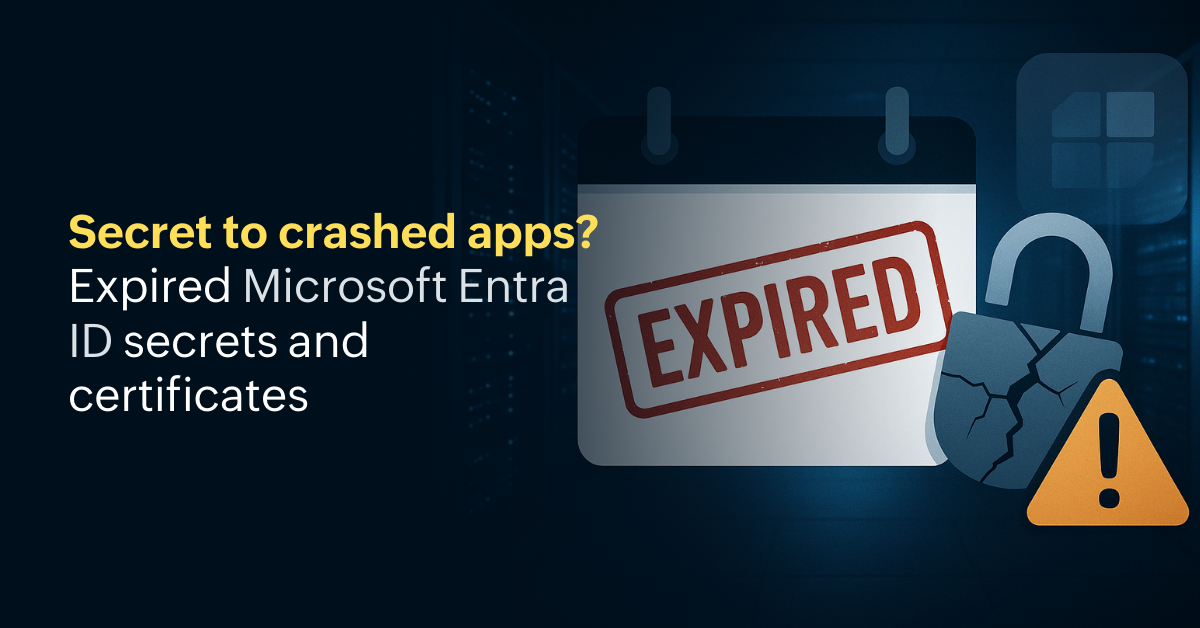
Not a sophisticated cyberattack. Not a worldwide cloud service outage. Just a single credential that quietly expired while everyone focused on "more important" things.
Is secret expiry that big of a concern?
Chances are great that enterprise-scale organizations have at least one expired credential in production right now. The math is simple: Credential visibility is often overlooked, and teams are mostly reacting to outages instead of proactively preventing them.
The top-level indicators to make your life easy
Expiring credentials (credentials that expire in less than 30 days) serve as your early warning system. The 30-day window represents the minimum viable response time for most organizations to identify affected applications, generate new credentials, coordinate deployments, and validate functionality.
Expired credentials should always be zero. Any non-zero value indicates active incidents, technical debt, or governance failures requiring immediate attention.
Total secrets and certificates establish your credential attack surface. Every credential represents an authentication pathway requiring life cycle management.
Application-level metrics: Targeted intelligence
Application name and ID enable correlation and accountability. Establish naming conventions that embed criticality and ownership. Here are some examples:
- PROD-Finance-SAPIntegration-API
- DEV-Marketing-CampaignPortal-Web
- PROD-IT-ServiceNowConnector-Automation
Granular credential metrics: Life cycle precision
Secret and certificate descriptions are your operational lifeline. When alerts fire, well-described credentials tell you immediately what they're used for, who created them, and what depends on them.
Good description | Poor description |
PROD-ServiceBus-Connection-CreatedBy-JDoe-2026-03-RotateQuarterly |
|
Created time and end time reveal life cycle patterns. Long validity periods (greater than two years) may indicate policy exceptions or governance gaps. Multiple credentials created the same day suggest troubleshooting confusion and require consolidation.
Certificates deserve special attention
Certificates require additional monitoring because they:
- Typically have longer validity periods than secrets (often months to multiple years depending on the policy).
- Are harder to rotate (require PKI coordination).
- Cause more severe failures when expired.
- Need shorter alert windows (not 30 days).
The most preventable outage reason, made easier with Site24x7 by your side
Your Microsoft Entra ID secrets and certificates are the keys to your Azure infrastructure. The metrics we discussed earlier are the early warning system standing between your organization and preventable catastrophe. Always remember that:
- One expired secret can halt million-dollar business processes.
- One compromised credential can become a headline-making breach.
- One governance gap can trigger regulatory penalties.
The teams handling this gracefully and easily have one common tool with them: comprehensive Azure monitoring by Site24x7. Here's how it helps:
- A tool for every level: NOC views, dashboards, and reports for everyone, including DevOps engineers, sysadmins, and CTOs.
- Multi-subscription ready: One tool for any number of subscriptions, accounts, and locations.
- Built-in automation: Fixes silently if required and informs you of the results as well.
You don't have to take our word for it. Try Site24x7 without any restrictions for free. See how Site24x7's Microsoft Entra ID monitoring can help make your credential monitoring effortless, along with a suite of other features all aimed at bringing you unobstructed observability.
Fantastic, long-awaited feature.